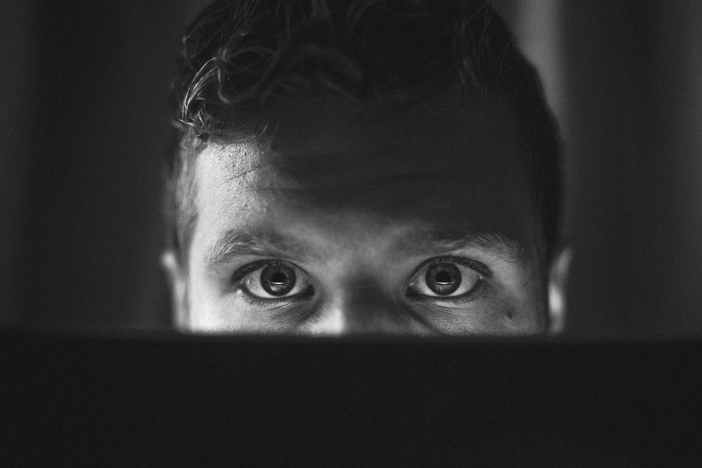
LOOK

laptop-eyes-technology-computer


I wrote this a little more than a year ago, but it seems, once again, very apropos…

***

I can’t believe I’m being dragged back into politics.  But that is exactly what’s happening.

In 2015 I quit visiting all the political websites that had held my interest for many years.  I stopped thinking about politics and discussing the topic with others.

2015 is also the year I left Egypt after living and working there for seven years.  During that time, I was very political, at least from 2008 to 2014.  In 2011, I witnessed the mass uprising against Hosni Mubarak and found myself swept away by the euphoria that followed his deposing.  Then, two years later, during the month of July, I watched in horror as Egypt’s first democratically elected president, Mohamed Morsi, was overthrown in a military coup.  Some very scary characters referred to it as a “second revolution,” but the more apt term was “counterrevolution.”

The counterrevolution crushed my spirit but not because I was a Morsi fan.  I was devastated because I had seen how hard brave Egyptians had fought to free themselves.  And I saw the sacrifices they’d made.  Suddenly, though, they were right back at square one or even worse.  The only way I could survive such devastation was to numb myself.  So, I withdrew from politics and became apathetic, which takes me back to the point I was making about myself in the second paragraph.

I had a bit of a revival when Bernie Sanders decided to run for president.  The old political juices began to flow again.  From the moment he declared his candidacy, I felt the Bern.  Eventually, he built an incredible following and I began to see a glass that was half full.  Egypt had certainly lost its way but America, it seemed, was on the verge of finding its soul.

Then the Democratic Party machine decided that Hillary Clinton was somehow owed the nomination.  Bernie was treated unfairly and his supporters were pushed aside.  Many of us warned that Clinton was too compromised and therefore vulnerable.  Too few listened to those warnings.  Too many people were too certain about what they thought was a foregone conclusion.  There were many ominous signs for those with the ability to see and read them.  With Bernie out of the race and everyone saying Clinton was a shoo-in, I began to lose interest again.

But I never drifted entirely away.  That weird sense of foreboding I felt wouldn’t let me turn completely off.  The mood of the nation reinforced the sense of dread I felt.  It seemed all too possible that something catastrophic might happen.  And it did on November 8, 2016, a date that go down in infamy.

Now that the world as we’ve known it is in the process of vanishing, the old jump-up-on-a-soapbox Troy has reawakened.

I grew up during a period when Americans smugly believed that the nation and its people were somehow special—or exceptional.  They watched as other countries fell apart or came under the influence of evil powers but felt that such things could never happen in the greatest country the world had ever seen.  America would always remain the beacon.  It would always set the model for others to follow.

But just look where we find ourselves now.  Just look.  Look long and hard.  And while doing so, make sure not to turn your eyes away.  Don’t delude yourself into believing that what you see isn’t as bad as many are suggesting.

The truth is, it’s every bit as bad as people are saying.  We cannot know for sure how bad it may get, but it is already way beyond horrific.


Azza, Christmas Cooking, and the Great Aunt Jemima

From 2008 to 2015, I lived in Cairo, Egypt, and taught at The American University in Cairo.  In the spring of 2011, about midway through my seven-year stint in North Africa and only two months after Hosni Mubarak was pushed out of office by an enormous uprising of fed-up Egyptians, I met Azza, a born and bred Cairene and the woman who would become my wife less than a year later.

When I met Azza, she had a successful catering business, specializing in Italian food.  Now that we are living in the US—in interesting San Antonio, Texas, a place that feels a little like an American city with a whole lot of Mexico mixed in—my wife is once again considering starting her own enterprise.  This time, though, she’s looking at opening a home bakery.  (The Lone Star State doesn’t heavily regulate the cottage food industry, thus incentivizing those who wish run such a business out of their own kitchens.)

We just finished up with the Christmas holidays.  By the way, my wife is a Muslim and she just loves this time of year.  In fact, she single-handedly destroys all the ugly stereotypes that many close-minded people—I’m thinking mostly about the Trump Evangelicals as I write this—have about practitioners of Islam.  I bring all this up because she did a ton of baking in the run-up to the twenty-fifth of December, and as is usually the case, because she is such a professional in the kitchen, she wrapped a turban around her head to keep stray hair out of the food she was preparing.

One morning I saw her with such a wrap on her head and told her she looked like Aunt Jemima.  Knowing that wouldn’t understand such a reference, I tried to explain who this person was.  As luck would have it, I went to the grocery store a few minutes later and found the appropriate aisle—the one where they kept the syrups for pancakes and waffles and such—and took a picture of the label with America’s beloved Aunt’s photo on it, only to discover (and quite surprisingly too) that the Jemima of today bears little resemblance to the Jemima of old.

The conspiracy theorist in me immediately jumped to the conclusion that they took her turban off because it looked too much like a hijab.  I figured that Quaker Oats didn’t want to feature a character who looked too foreign or too exotic or too Islamic.  After all, this is Trump’s America and the rest of us are only living in it.

As it turns out, there was a reason for the company to modernize Aunt Jemima’s image, but it had nothing to do with them trying to make her look less like a Muslim.  I’ve included a video that explains the whole interesting story about the politics behind the revamping of the image of this cultural icon.


M****** Wanted to Ride Me Like a Donkey

A few days ago I started penning  a memoir as a way of coming out of a period of creative dormancy.

This post–the part that follows this intro–is an excerpt from that not-yet-titled autobiographical work.

This will be my second autobiography.  The first one was called Blue Yonder.  It was never published even though I sent it off to several literary agents in NYC (and elsewhere) and was able to generate considerable interest.  M****** K******–I don’t remember the name of the agency she worked for–strung me along for months.  She liked the manuscript but requested a few rewrites which I completed.  She also asked me to write up a book proposal.  Again, I obliged.

I sent the proposal off and she took a long while reviewing it.  She came back with a critique of my marketing plan.  She asked me to do a little research on how to market a work of nonfiction and then resubmit the proposal.  Being the good boy that I am, I did all that she asked.

To make a long story short, she eventually, after giving me the run around and building my hopes up, sent a cursory rejection note.  This had been the culmination of months of work on my part and lots of to and fro emailing.

This whole experience taught me lessons.  For one, my writing is good enough.  (She even told me so.)  Secondly, her sole reason for rejecting me was rooted in the fact I hadn’t proved to her that I could be a good salesman.  By the way, I never, not once, not even in the initial query letter, promised that I was an experienced hawker of books.  (Isn’t it asking enough that one be able to write one?)  Wasn’t she supposed to do something other than contact the publishing houses after I’d put years of labor into the project?  Her webpage promised that she would be with her authors every step of the way.  Did she really mean that or were those just pretty words?

What M****** wanted was to ride me like a donkey.  I was supposed to carry her to the place where all the money could be found and then she would jump off my back long enough to fill her saddlebags with dough.  Had I signed up with her and had book sales lagged, I sure she would have taken out a stick and flogged me on my butt along with digging her spurs into my flanks.

Anyway, I’m ready to try again, but not with M******.  The first couple of pages of the first-draft of this second attempt can be found below:

***

My heart is untroubled, and my face wears a permanent smile.  When I close my eyes and try to visualize what I look like, in my current state, I see myself as a contented Buddha-like character, sitting with crossed legs under a lotus tree.

I’m speaking metaphorically, of course, as well as beating around the bush.  I’m trying to say that I’m in one of those rare good places in my life where everything seems to have worked out perfectly well and now, as a result, I am truly happy.  I don’t know if this wonderful turn of events happened because I was able to engineer it to be so or if it’s the result of pure dumb luck.

Most of the last two years—up until about four months ago—have been damned hard, and I was, during that period of darkness, not at all feeling blissful.  Looking back at my recent past, I could say—without being guilty of anything that even remotely resembles exaggeration—that I’ve just come through hell.  On my trip through the fiery pit, I got a bit singed but wasn’t wholly reduced to ashes.

My story starts on the evening of July 2, 2015, the day I landed at Austin-Bergstrom International Airport in Austin, Texas, and was greeted by my father and stepmother.  I hardly remember my arrival in Texas’ capital because I was so exhausted.  I’m sure that the three of us talked about how my flights had gone and other inane subjects while we waited for my two pieces of luggage to find their way onto the baggage carousel conveyor belt and then into my hands.  We then made our way to my parents’ parked car, loaded my suitcases into its trunk, and drove the whole kit and caboodle to Georgetown, Texas, a beautiful, smallish city that’s located just up Interstate 35 about half an hour or so.  Once in Georgetown and at my folks’ place, I went immediately to bed and slept the fitful sort of semi-slumber I always have after completing one of my international sojourns.

This particular trip had been a really long one.  I’d started it in Cairo, Egypt, and had passed over portions of three continents—Africa, Europe, and North America—and two significant bodies of water—the Mediterranean Sea and the Atlantic Ocean.  I’d had a long layover at Paris’ Charles de Gaulle International Airport where I wiled away the hours awaiting my next flight by wandering among souvenir shops and looking at tiny, plastic versions of the Eiffel Tower.  My movements through said shops bore a strong resemblance to the way a zombie might wander in a post-apocalyptic landscape.  On a side note, many people who travel by plane have the good fortune of being able to sleep aboard those big birds as they cruise high above terra firma, but I am not blessed like this, which means that I always have to find ways to kill time.  Often, while on board, I achieve this by drinking as much alcohol as my belly and bladder can hold.  This method is tried and true for me and I took full advantage of it as I made my slow way over land and sea…


#NotMyPresident #TheResistance

points-of-light

I have this friend named B*** S******.  We got to know each other while we were both teaching at The American University in Cairo.  I returned to the US in 2015 and he did so a year later.

When I came back, I got a pretty lucrative education and training job with the Department of Defense as a private contractor.  I was hired to work with foreign military personal—both enlisted and officers.  I had students from Saudi Arabia, Kuwait, Iraq, the United Arab Emirates, Oman, Djibouti, Jordan, Mauritania, Togo, the Democratic Republic of the Congo, Afghanistan, Georgia, Bulgaria, the Ukraine, Mongolia, South Korea, and Indonesia.  I might have left out a country or two, and I apologize if that’s the case.  Then, student enrollment declined, beginning in the springtime, and I got laid off exactly one year after hiring on, making me collateral damage which sounds a lot better than a bullet-riddled corpse that had been mutilated beyond all recognition.  It was the first layoff of my life and it came at the worst time imaginable.  In fact, it’s left me with ugly scars and something akin to PTSD.

B*** came back and got a job at a community college in some Podunk in the Midwest, an area sometimes called “flyover country,” and for good reason, because to land there puts one at risk of contracting a deadly form of ignorance, the sort that turns the brain to mush, making someone like Donald Trump look like a reasonable human being who might make a good president.

I might be giving my friend’s current place of abode away by saying it garnered national news a while back when the police arrested three scraggly, lily-white, neo-Nazi-looking guys who were in the midst of plotting to blow up a building inhabited by Somali refugees who had committed the heinous crime of leaving their troubled homeland to start life anew.  I’ll go back and look at the reports again, but I believe one Donald Trump, the fellow who froths at the mouth like a rabid skunk when you suggest he’s opened up Pandora’s Box of hate in the country, had been the rednecks’ primary inspiration.

To quote one of my favorite writers of the 20th century, a kinky headed dude named Kurt Vonnegut:  “And so it goes.”

B*** and I talk about politics on the phone from time to time.  During one of our pre-election conversations, I said, “There might be a silver lining to the election of DT if it happens.”

“What the hell would that be?” B*** asked incredulously.

“Well, in the short run, I agree it would be catastrophic, but in the longer term, it would likely be a powerful impetus to kick start a truly robust progressive movement the likes of which American has maybe never seen before.”

Do I see such a coming together of progressives happening now that we are living in the alternative universe known as Trump Reality?  Quick answer:  Hell yes.

The last time we talked—about two weeks after that very flawed presidential election—B*** was terrified.  (I could hear him quaking in his boots through the phone.)  His fear was that we were entering a phase where the fascist brutes, aligned with law enforcement, would just start rounding people up or mowing them down—whatever was most cost-effective and convenient.  I advised my buddy to get on Twitter and just have a look around at the pushback that was taking place against the Chief Nihilist of the US and his fascist minions.  If he did so, I exhorted him, he’d feel a lot better.

I have always felt that STEP ONE in the resistance of despotism can only come after millions of people have linked arms—this linking can start virtually, on places like Twitter—become comrades, and have declared a common goal.  This is happening as I write this.  If you’re feeling alone, hopeless, and isolated, reach out to others who are your political brothers and sisters.  Once you do this, you will begin to feel a part of something that is much bigger than yourself.  This will embolden and inspire you.  You’ll see that lots and lots of people have your back.

You will also discover resistance movements and find out about street protests and planned acts of resistance and civil disobedience.  Join one and become an activist.  Use your feet to move through the streets.  As your feet carry you along, your voices will rise up to say “No!”

My feeling is the fascists are really mostly bluster.  (It is no accident that the most obnoxious ones hide behind fake Twitter handles, afraid to show their true identities.)  Stand up to them.  Get in their faces.  And they will ultimately slink away.

Forced Awakening

seeing-whats-there

I can’t believe I’m being dragged back into politics.  But that is exactly what’s happening.

In 2015 I quit visiting all the political websites that had held my interest for many years.  I stopped thinking about politics and discussing the topic with others.

2015 is also the year I left Egypt after living and working there for seven years.  During that time, I was very political, at least from 2008 to 2014.  In 2011, I witnessed the mass uprising against Hosni Mubarak and found myself swept away by the euphoria that followed his deposing.  Then, two years later, during the month of July, I watched in horror as Egypt’s first democratically elected president, Mohamed Morsi, was overthrown in a military coup.  Some very scary characters referred to it as a “second revolution,” but the more apt term was “counterrevolution.”

The counterrevolution crushed my spirit but not because I was a Morsi fan.  I was devastated because I had seen how hard brave Egyptians had fought to free themselves.  And I saw the sacrifices they’d made.  Suddenly, though, they were right back at square one or even worse.  The only way I could survive such devastation was to numb myself.  So, I withdrew from politics and became apathetic, which takes me back to the point I was making about myself in the second paragraph.

I had a bit of a revival when Bernie Sanders decided to run for president.  The old political juices began to flow again.  From the moment he declared his candidacy, I felt the Bern.  Eventually, he built an incredible following and I began to see a glass that was half full.  Egypt had certainly lost its way but America, it seemed, was on the verge of finding its soul.

Then the Democratic Party machine decided that Hillary Clinton was somehow owed the nomination.  Bernie was treated unfairly and his supporters were pushed aside.  Many of us warned that Clinton was too compromised and therefore vulnerable.  Too few listened to those warnings.  Too many people were too certain about what they thought was a foregone conclusion.  There were many ominous signs for those with the ability to see and read them.  With Bernie out of the race and everyone saying Clinton was a shoo-in, I began to lose interest again.

But I never drifted entirely away.  That weird sense of foreboding I felt wouldn’t let me turn completely off.  The mood of the nation reinforced the sense of dread I felt.  It seemed all too possible that something catastrophic might happen.  And it did on November 8, 2016, a date that go down in infamy.

Now that the world as we’ve known it is in the process of vanishing, the old jump-up-on-a-soapbox Troy has reawakened.

I grew up during a period when Americans smugly believed that the nation and its people were somehow special—or exceptional.  They watched as other countries fell apart or came under the influence of evil powers but felt that such things could never happen in the greatest country the world had ever seen.  America would always remain the beacon.  It would always set the model for others to follow.

But just look where we find ourselves now.  Just look.  Look long and hard.  And while doing so, make sure not to turn your eyes away.  Don’t delude yourself into believing that what you see isn’t as bad as many are suggesting.

The truth is, it’s every bit as bad as people are saying.  We cannot know for sure how bad it may get, but it is already way beyond horrific.

Had I Been Born a Cat

I’d be a lot more relaxed than I am right now had I been born a cat.  That’s because I’d know, right in the back of my feline mind, that I had been given nine lives, which is a lot of time to work with and provides for a large margin of error.

Human beings, unlike cats, are given only one life, and it’s a fairly short one.  To make matters worse, a lot of that one lifetime is either spent asleep or doing things like sitting in a cubicle at work.

I’m writing all this because I am cursed with a strange affliction.  From just about the moment I was born, I have had too many interests and passions.  I am a very creative person with lots of different talents, all of which I’d love to equally pursue.  But I can’t because of the whole lack of time thing.

I’ve had to neglect this blog, and I’m so upset about it.  It’s not that I haven’t been writing.  I have been.  In fact, I’m about sixty percent done with a novella that should end up being about hundred pages long.  It’s a dark book which suits my current mood.  (There’s a backstory there that I won’t get into right now.)  The thing falls within the genre of psychological thriller with elements of the horror story.  My working title is The Red Room.

I’ve also been doing a lot of digital art.  In fact, on the art front, there has been an interesting development.  About a week ago, I got an email from someone representing Vida.com, an interesting company that works with artists and designers to produce fashionable, high-end clothing and accessories.  The person reaching out had seen my work and wanted me to send them some of my images.

So I will send some.  And I will continue to work on my novella when I can fit it in.  And I will continue to make art, mostly late at night when the opportunity presents itself.  Oh, and by the way, I hope to be a more regular blogger too.

I’ll finish by sharing a few pieces of my newest digital artwork.

Hoot!

owlsI’ve always been a collector.  I can’t even remember when, precisely, this habit got started.  As a very young lad, I owned several hundred—it could have been as many as a thousand—stamps from many countries of the world that I would diligently paste into albums, using those little hinges that could be purchased in variety stores.

Over the years, you name it and I’ve obsessively acquired it.  I went through a period when I was interested in porcelain objects that had the worlds “Occupied Japan” stamped on their undersides.  I then got into refrigerator magnets and spent hours shopping for them on eBay.  I currently have a couple of dozen beautiful Middle Eastern rugs on the floor of my apartment.  I remember how much pleasure it gave me when I acquired each one.  Honestly, if I had an unlimited supply of greenbacks, I’d probably become something akin to a hoarder.  The feeling I get when I simply hold one these highly prized objects in my hands is hard to describe.

Having said all this, you probably will not be surprised to hear that I have been buying owl figurines—made of every sort of material that can be used to manufacture such a creature—for a great many years.  In fact, my collection is so extensive that I don’t even have all of them in my possession.  Many are stored away in boxes in closets inside houses that belong to a great many relatives.

My interest in owls began as a result of an interesting encounter I had, now a couple of decades or so back, with a real live bird of this sort.  This “meeting” (of the souls?) happened while I was visiting my maternal grandparents who happened to reside, at that time in their lives, out in the country, a dozen or so miles to the west of a little Texas city called San Angelo.

Just after breakfast, on the second day of a four-day visit, I announced that I wanted to take a walk, so I bundled up—it was a cold, wintry day as I recall—and then left the house.  I wandered for an hour or so.  My walkabout took me down forsaken country roads that meandered here and there and then petered out, becoming little more than footpaths in the process.  I breathed the crisp country air in and exhaled clouds of steam.  I looked up, studied the sky, and wondered if it might sleet or even snow.

During such a moment of speculation, a voice in my head said, “Turn around now and have a look at what’s behind you.”  When I did so, I saw an enormous bird—I didn’t yet know that it was an owl—perched on the limb of a dead tree, not more than ten feet away.  The creature had its back to me, and it stayed like that for several seconds as my eyes fixated on it.  Suddenly, its head swiveled around and I saw two large and seemingly inquisitive owl eyes peering at me.  The two of us held perfectly still like that, staring at one another, for what seemed like a long time.  The bird abruptly blinked, maybe three times, let out a preternatural hoot, and then flew away.

About ten days later, while wandering around in a junk shop, I bought my first owl.  Before deciding to make the purchase, I held the thing in my hands a good long time, checking it out for imperfections.  I found none and the price was right.  The rest, as they say, is history.


I’m Pretty Sure I’ve Been Here Before

Life takes some incredible twists and turns.  About a million years ago, I was born in San Antonio, Texas, a city that’s a little bit America and a little bit Mexico, and then, back when I was still pooping in diapers, mom and dad carried me off to Garland, a suburb of Dallas.  Over the decades, I have had one or two opportunities to return to my birthplace, but only as a tourist and only for very brief visits.  Mostly, I’ve been estranged from the locale that could rightfully be called my hometown.

Then, in the latter days of September of 2015, a few months after I’d left my post at The American University in Cairo, a very sudden job offer in San Antonio came my way while Azza—my Egyptian wife of five years and new America émigré—and I were camped out with family, in their guest bedroom, in another part of the Lone Star State.  Of course, I signed on the dotted line, right where my new employer told me to.  We then loaded up, headed to south Texas, down where the beautiful language of Spanish is ubiquitously spoken, and set up house.

All these years later, I am back in San Antonio, the place where I (literally) got my start.  From time to time, when I’m tooling around the city, I get this weird déjà vu feeling.  As a matter of fact, this past weekend, Azza and I went to the San Antonio zoo, and while standing in front of the flamingo cage, I had this odd sensation that I had stood in this exact spot before.  The bird scene before me seemed bizarrely familiar.  I lifted my camera, took a few photos of the pink, hook-nosed birds, while goosebumps rose on my arms.

flamingo

We spent three hours among the animals and enjoyed our time more than I can accurately articulate here.  I’ve always been a nut for creatures—this nuttiness was especially acute when I was a tyke—and I felt that old delight resurface as we moved from cage to cage.  For some reason, on this particular outing, I especially liked the fish in their various watery enclosures.  They swam past us, flashing a zillion neon colors as they went.  In fact, I was so captivated by them it took me a while to actually notice that in one particularly large aquarium there were two hippos, their grotesquely large bodies magnified by the water, floating among those finned and gilled darters.

I’ve included a few photos here and am upset with myself that I didn’t get a good shot of the gibbons as they swung through the treetops, picked insects off on another, and otherwise reminded me of how humanlike they are.  While watching them do their monkey business, I got so enthralled—my mouth was probably agape—that I simply forgot to lift my camera and click the shutter.


The Accidental Teacher: An Essay and Memoir (Part 9)

I have had a pretty unique job during most of my adult life.  I have been a teacher—for what seems like forever now—but I’ve never really been the sort who wanted my students to become more knowledgeable, which I associate with acquiring information.  Instead, I have tried to help them hone skills that promote wisdom or shrewdness.  In other words, I haven’t focused on what they should know but on how they should know.  “How” one knows is often referred to as thinking.

Most people believe that thinking comes naturally to everyone because we’re all born with brains.  It’s true we’re born with this organ, but there is a world of difference between run-of-the-mill thinking and critical thinking (or good thinking), just as there is a world of difference between the sounds made when my untrained fingers hit the keys of a piano and the music produced by a world-class concert pianist when his or her fingers touch the ivory.

There are a million things which interfere with good thinking.  At the moment, I don’t have time to get into all these factors.  The old saying, “The apple doesn’t fall far from the tree,” explains one of the most important influences on our intellectual development.  Most grow up thinking in the same way their parents did and thus believing in the same things too.  Our parents are our first models and their influence leaves a deep imprint.  To be able to “fall far from the tree” requires that we have to, at some point, question our parents’ way of seeing the world and this takes great courage.  In fact, there is no activity in life that requires more bravery than to think critically because to do so one must sometimes say “no” when important others (or maybe even the whole community or world) is saying “yes.”  Saying no when others are saying yes can be costly or even dangerous.  It’s certainly easier (and more comfortable) to just go with the flow.

I’m thinking a lot about thinking these days because that’s what I do.  Plus, it is campaign season in America and that means the news is full of stories about powerful and ambitious people putting their thinking on display in an attempt to get others to vote for them.  In the interest of full disclosure, I’ll just go ahead and tell you that politicians with the most progressive points of view generally tend to think a lot better—I’m not talking about their ideas, which I also find attractive, but about the methods they use to formulate their ideas and then state them to the public—than do conservatives.  Political conservatives—I actually like to call them “regressives”—make a lot of very classical thinking mistakes that many others might not catch because they aren’t trained to look for them the way I am.  In fact, regressive politicians often make arguments that simply leave me shaking my head.  The fact that so many Americans find such unskilled thinking attractive often makes me despair about the future of the country.

At this point I should probably tell you that I made myself a promise several years ago.  I promised to do whatever was necessary to become the best thinker I could possibly become even if this meant that I would ultimately have to embrace very unpopular ideas.  In my attempt to constantly improve myself intellectually, I often find myself butting heads with what is called “conventional wisdom,” which is mostly a first-rate oxymoron.

I want to conclude by reiterating something I said in a previous blog.  Critical thinking is a way of being.  It is a method of living life with great integrity.  It is not something I turn on and off at will.  It has become the way I conduct myself in this world.

The Accidental Teacher: An Essay and Memoir (Part 8)

I may have become a teacher by sheer accident, but that doesn’t mean I’m not willing to vigorously stand up for my profession or for my colleagues in the trenches.  By the way, many of these colleagues do incredibly important work under tremendous duress.

In “Teacher Autonomy Declined over Past Decline, New Data Shows,” Tim Walker writes that “classroom autonomy is a major factor in determining level of job satisfaction [among teachers]” because “it speaks to whether educators are treated as professionals.”  In other words, taking away teachers’ freedom of self-determination sends a very powerful message to those who are on the losing end of the stick.  It says we no longer trust you to make important decisions about how you do your work.  We think you are incapable of acting responsibly on your own or thinking for yourself.  We are worried that you’re going to do and say the wrong things.  So, to keep this from happening, we will provide you with a script and ask you to do nothing more than read from it.  Memorize your lines, and for heaven’s sake, don’t improvise.

Is it any wonder that so many teachers are feeling so demoralized?

Listen.  Teachers are not stupid people.  They have been educated in fine universities and deserve the sort of respect given to those with similar credentials who work in other fields.  This whole push to turn educators into functionaries (or automatons or script readers or whatever term you want to use) tells them everything they need to know about how their bosses view them.  If their “superiors” really thought they were entirely capable, then scripts and such wouldn’t be needed.  After all, a script is a kind of crutch that is given only to those who are deemed incapable of walking on their own.  Am I right?

This loss of autonomy isn’t just happening at public schools.  In fact, it happened at my last two university gigs—at Bilkent University in Ankara, Turkey, and at The American University in Cairo, in Cairo, Egypt—places where I was hired to teach credit-bearing writing, research, critical reading and thinking courses to first and second-year students.  Though both cases were bad, the most grievous took place in Egypt.

When I was first hired by the Department of Rhetoric and Composition at AUC, instructors were allowed to design they own courses as long as they helped students meet a broad set of learning objectives.  These educational goals included helping pupils become better thinkers as a result of developing their critical reading, writing, and research skills.  Everything was fine during my first two or three years in the department.  About the fourth year I was there, though, something began to change.  Someone (or some group)—decision-making was kept pretty opaque so none of us had any real idea who was pulling the strings—decided there was too much variety in the kinds of classes being offered.  (No evidence was provided to demonstrate that this variety was having any sort of detrimental effect on students or their abilities to function within the university.)  Anyway, eventually this decision led the department to create a very prescriptive course template that was handed out to all.  Teachers could still apply to design classes provided that their proposals met a very set narrow set of parameters, many of which made no sense to most of the faculty, especially to those with many years of teaching and course development experience.

I decided to play along and turned in a proposal only to have it rejected.  This came as a shock to me since I had been a successful course designer for more than twenty-five years.  Over these decades my creations had been looked at my many dozens of sets of eyes and had passed all sorts of scrutiny.  Additionally, many of my classes had been deemed so well put together and successful that they had been offered as models to other instructors, even to those in the Department of Rhetoric and Composition at AUC, the very place that was now telling me my newest proposal was a failure.

So, for the first time in my professional life I was not allowed to create a course and ended up teaching from a syllabus that was simply handed to me.  Needless to say, I never really believed in the class—I’m a veteran who has trouble teaching unless I feel that I have “ownership” of the thing being taught.  I’m sure this lack of passion manifested itself in many visible ways, which meant students could feel, from day one, that my heart wasn’t fully involved in the project.

Two semesters later, I handed in a letter of resignation and shortly thereafter said goodbye to the school after seven years.  I was certainly not alone in my decision to leave.  As a matter of fact, the department lost twenty-five percent of its instructors the term I departed.  This, by the way, was an unprecedented loss and should have sent a strong message to those in charge.