The Man My Father Was and Is

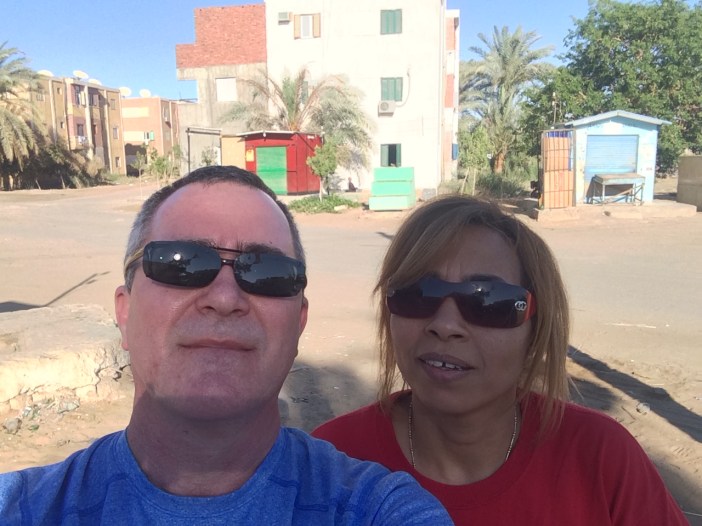
My wife and I just got back from Georgetown, Texas, the town I grew up in and the place my father and stepmother still call home.  And now, this Sunday morning, I’m looking inward, to see what sort of thoughts bubble up about this recent visit with two people I’m very close to.

I feel that there’s a story I want to tell this morning about the visit.  There are thoughts, some tinged with a sense of melancholy, that need getting down and organizing.

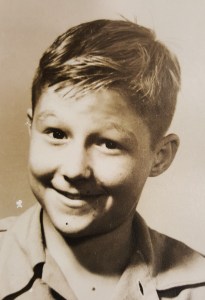
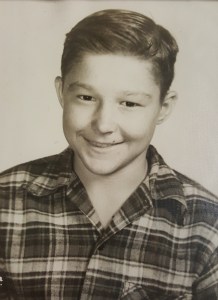
Earlier this week, days before we took off to Georgetown, my father was much in my thoughts.  This preoccupation was triggered when I got into a box of old photos and found two of him that were taken when he was just a boy.  I spent a long time holding those pictures in my hands and looking at them.  They were likely taken in the early to mid-1940s, at a time when a great war raged and the world was a much different sort of place.  Today, in 2018, my father is an octogenarian, but I can still see signs of that boy when I look at those images.
 

Last night, I sat across the dining room table from my father after dinner and while the dishes were being cleared.  As often happens on such visits, I prompted him with questions about what his life had been like decades ago.  He often complains about how bad his memory has gotten, but he somehow always manages to recollect past events, in minute detail, and then share them.

“Did I ever tell you about Billy Dowdy?” my dad asked as he removed his glasses, an act which allowed him, I suppose, to see way back.

“I don’t think so,” I answered.

“So you didn’t know Billy Dowdy?”

Janie, my stepmother, said, “Roy, he couldn’t have known him.”

As it turns out, Billy Dowdy was a man several years younger than my father.  He’d grown up in a little shack of a place that was located in a field behind my father’s boyhood home and not far from the San Gabriel River, a vein of blue-green water that the two youngsters knew well and swam in together.

In 1953, after finishing high school, my father joined the US Air Force and was sent overseas, for four years, to places like Guam and Japan, to learn and send messages in Morse code.  Before being shipped off to those faraway places, he recalls saying goodbyes to everyone he’d ever been close to.  Of course, Billy Dowdy was one of those who’d received such a farewell.

In 1957, when dad had completed his military service, he returned to Georgetown and went to see Billy, to let him know that he was back in town.  Much to my dad’s amazement, Billy, the boy, was now Billy, the alcoholic man.  He’d aged more than four years could account for.  Dad recalls that his boyhood buddy now carried a bottle with him wherever he went and that he would take his first swig immediately upon waking up and wouldn’t take his last until the booze ran dry or he’d pass out.  Where had Billy, the lad full of life and possibility, gone off to?

My father liked to party too, and sometimes he’d pick Billy up in his old roadster and the two would go honky-tonking together.  Dad remembers how his boyhood companion could sing exactly like Hank Williams.  He had a beautiful voice, and my father would drive and listen to Billy sing those sad cowboy songs as the two moved through the dark night with the windows rolled down and the breeze ruffling their combed and oiled hair.

Billy got arrested a lot and died in the Georgetown jail.  That was how Billy’s story ended.  It was also the point my father stopped telling it.  He put his glasses back on and looked down at the table.

When he looked back up again, he asked, “How had Billy gone from what he’d been to what he’d become in four short years?”  Such a transformation was beyond my father’s understanding.

I’m sitting here thinking about the question my father asked and how universal it is.  How have any of us become the people we are now?  How much of all that was by choice and how much was outside our human control?


Portals

people-sign-traveling-blur

I miss airports. I know that might sound like crazy talk to those who travel, via air, all around these United States on business trips and therefore find themselves rushing from one terminal to another and one departure gate to another. It might sound like kookiness to other classes of people too. That’s possible, even probable. But to know how I lived for two decades of my life is to understand why I miss airports.

Facts are always important, so I’ll throw a few out there. I have flown over the Atlantic Ocean somewhere around forty times, and I have cruised, at thirty-something thousand feet above sea level, over many smaller bodies of water too. I have lived and worked in five countries—America, Poland, the United Arab Emirates, Turkey, and Egypt—located on four of the seven continents. If my count is correct, my two size-eight feet have tread across the soil of twenty-three nation-states, and planes have taken me to all of them. Ergo, I have been in many airports of the world and have developed a great fondness for such magical buildings.

I don’t use the word “magical” casually.  If you think about it, airports are portals.  A traveler steps into one, boards a flying behemoth, defies the law of gravity by lifting off terra firm, only to be deposited in a new place quite far away from where one started.  At the airport where one departed everyone was speaking English.  And then, when one disembarks, halfway around the world, people are mostly using Turkish or Chinese or Tagalog.  Such dramatic changes are jarring and they have a tendency to wake one up out of the deepest of metaphorical slumbers.  Then there’s the jetway, the most magical of magical places.  The jetway, leading to the plane, is something like an umbilical cord, though the analogy is not perfect.  Once inside the womb of the jumbo jet, one is connected to mother earth.  At liftoff, that connection is broken and one finds himself as disoriented as a newborn.

Though I am in love with airports, I’ve never been that wild about airplanes. It’s not my idea of fun to strap myself into a glorified tin can and hurtle through time and space at hundreds of miles per hour and tens of thousands of feet in the air. Airports, on the other hand, are a different story. Airports are hub spots and make great metaphors. For example, they are hives where planes gather and live. People, like bees, buzz through these great hives too.

Though I had taken short flights from one city in America to another even as a boy, my real experience with airports began in 1994 when, after an incredibly strange series of events, I went around a bend in the road of my life and joined the Peace Corps. The US government, after looking at all my paperwork and interviewing me on the telephone, decided to send me to Poland to do educational consulting work and teacher training.

We soon-to-be Volunteers flew out of JFK International Airport in New York. If NYC is the world, in microcosm, then JFK International is a condensed version of that metropolis. Up until ‘94, I was a rural, small-town guy and a mere amateur when it came to traveling. In JFK, I saw, for the very first time, the peoples of the planet, gathered together in all their infinite variety, and was thrilled to death by the spectacle. It was one of those moments—they come on rare occasions—when the eyes behold something of great wonder and portent.

Many hours after getting airborne, we landed in gloomy Warsaw and disembarked at Okecie Airport.  Poland’s largest portal seemed tiny and poor by comparison to JFK. The Poles we encountered there seemed tired, world weary, very Old World, and fascinated by all the Americans suddenly in their midst. I recall that the locals spoke a language full of soft sounds and unapologetically smoked while we waited for our baggage to come around the carousel.  In airports, travelers get that first jolt of culture shock.  The newness of a new place walks right up to you and gets in your face.

Schiphol International Airport, in Amsterdam, is probably my favorite facility of its type in the world; although, I would give honorable mentions to Barajas Airport in Madrid, O’Hare in Chicago, and the International Airport in Dubai.  I also have a very fond recollection of sitting at a tiny bar that was located near my departure gate in Houston’s George Bush Intercontinental.  I recall that I was ordering the most exotic bottles they had and emptying them like a real pro.  I was the bartender’s only customer so he had time to talk.  I can’t really recall where I was flying off to, but it was probably Egypt.  He was very curious about North Africa and Islam and I had time to teach him a bunch.

Back to Schiphol.  I have been in that airport probably ten times and have taken the train—the station is just below the ground floor—into the city six or seven of those times. If you do so, you end up right at the main train station in the heart of the old city.  The train doors slide open and one exits the building only to be confronted by the grandeur and magic of Amsterdam.  Come to think of it, train stations are places of great wonder too, and I have been in many throughout Europe and in parts of Asia.

I have had long layovers in Schiphol. Because of such waits, I have had the opportunity to rent hotel rooms, inside the airport proper, on at least two different occasions. (Most recently, in 2009, I stayed in a postmodern place called Yotel and have vivid recollections of how the hallway leading to my room was lit by purple neon, giving the place a kind of Star Trek feel.)  I know Schiphol so well and find it so inspiring that I would easily choose to live there if I were rich enough and free enough to be able to make that happen.  I know that sounds like the ravings of a lunatic, but I assure you that I’m speaking the truth.  I would actually TAKE UP RESIDENCE inside Schiphol Airport if I were younger and freer and had deeper pockets.

Moving freely around the world and passing through airports is now in my past. My Egyptian wife and I have decided, for a whole bunch of reasons, some of them political, to settle, at least for the time being, in the fascinating city of San Antonio in Texas, USA.  We are doing what some call “putting down roots.”  In my former life, I was in international education and thus had the sort of free time which gave me ample opportunity to travel. Today, on the other hand, I’m working in educational administration and don’t have as many vacation days as I once did. In fact, I haven’t stepped foot inside an airport, as a traveler, since the summer of 2015. That’s a real change in my way of being.

On some day of great import, we’ll pull up these roots and become vagabonds again. When that happens, it won’t take me long to adjust to my old ways. After all, travel is a big part of who I am even if that part of me is now dormant. And the airport, that place that appeals to the dreamer in me, will once again become the closest thing I’ll have to a home.

This Morning’s Commute

commuting

I opened the front door and the cold hit me.  I stepped out into it.  The sun was just coming up in San Antonio, and the outside colors were muted and tending toward the grayscale.  We live a short distance away from Loop 410, the Alamo City’s inner ring road, and I could hear, even as I walked down the sidewalk toward the truck, a roar—the collective voice of a million cars being pushed along by human beings.

It was cold as I slid into the seat, closed the door, inserted the key, and fired up.  I shivered, blew steam from my mouth.  I punched a button that would, in a few minutes, get heat going into the cab.  The truck was ready now, so I released the handbrake, put it in reverse and left.

I know a way to avoid the nearby school zone.  San Antonio is a big city that is filled with people, many of whom have children.  For the commuter, school zones mean slowing down and pausing for buses and children crossing streets.  For the commuter, these delays are maddening.  What we commuters turn into, at 7 a.m., is something single-minded and harried.  We curse those things we would normally tolerate.  We become something other than what we naturally are.

There is a moment, shortly after I turn off Marbach Road, when I can see the on-ramp to Loop 410.  I punch it then and my machine, made by the Nissan Corporation, makes a guttural sound.  I feel like an astronaut in the early moments of liftoff.  The force of acceleration pushes my head back as I rocket toward the great flow of vehicles.

I know this route and routine well.  I am one of a million now, jockeying for position, weaving in and out, and watching for signs of danger.  We are heading south.  Soon, I will make the big eastward turn and the sun, just peeking above the horizon, will cause me to squint.  The sky is becoming more interesting, moment by moment.  I would love to spend more time studying its shapeshifting clouds and nuanced colorations, but I have to remain wary.  Surrounded by these machines, madness, and speed, anything, at any time, could happen.

We pass by all sorts of landmarks, including the factory that puts out plumes of steam or something else.  The place produces God knows what.  It marks the moment we turn toward the east, and I adjust the visor to keep my eyes shaded.  What I am witnessing now, all around me, in this great flow of machines, is the human condition writ large.

I eventually take the Palo Alto College exit and the frenzy dies down.  I have a left turn to make and then two right ones.  A sign tells us we may drive our machines at forty miles per hour but no faster than that.  I make those turns and then pull into a lot where I turn the key in the ignition, putting my machine to rest.  Its engine pings and pops as it begins to cool down.  It will spend the next few hours resting up and preparing to carry me home as the day moves from light to dark.

I envy my machine as I step away from it.  It’s now my time to roar.

Charles Bukowski Currently Teaches English at Starbucks

charles-bukowski
The Real Bukowski in All His Glorious Madness

Last Saturday I met Charles Bukowski at a Starbucks in a Barnes and Noble bookstore in San Antonio, Texas.  He was arriving just as my wife and I had finished up our coffees and were gathering our belongings to leave.

Because he could see that we were getting ready to take off, he walked right up to us and asked, “Are you finished here?”

“Yes,” I answered as I stared at his acne-scarred face and misshapen nose—the bulbous proboscis of a wino.

“I ask because you’re at my favorite table, and I want to claim it if you are leaving.”

“You can put your stuff here if you’d like while we get ready to head out.  By the way, has anyone ever told you that you look exactly like Charles Bukowski?”

“Charles who?” he asked gruffly.

“Never mind.”

In fact, he was a spitting image of the renegade poet-madman-drunkard.

Because we’d bought books and had to put on coats and scarves to gird ourselves against the cold, it took us awhile to get our stuff together.  During this period, a conversation began to blossom.  “So you come here often?” I asked him.

“Every Saturday.  You see, I’m retired, but I give private lessons on the side to people who want to learn English.  Right now, I’m working with three young girls from Djibouti.  I always teach them at this particular table.”  After saying this, he leaned in to me and whispered, “Their English is very weak.”

Azza, my wife who speaks Arabic as her mother tongue, is not really a shy person, but she sometimes has a hard time inserting herself into a conversation between Americans when they are speaking a hundred miles an hour.

“I bet they’ll learn very fast, though,” I told him.  “They will probably be better at learning our language than we would be at learning theirs.”

“Maybe.  But who would want to learn whatever it is that they speak?”

“Ask them to speak their language to you and really listen to what they say.  I bet what you hear will sound beautiful if you open your ears and mind.  It’s my opinion that more Americans should learn a second language.”

He kind of frowned and then said, “So many people from crap countries want to come here.  They are just flooding in.  They have to learn English because it’s the lingua franca.”

I could feel the hair stand up on my neck.  Only days earlier, Donny Trump, the Hairpiece, had called African countries “shitholes.”  I had the feeling this old fart was likely a Trumper, and a part of me wanted to snarl.

“By the way, I’d like to introduce you to my wife, Azza.  She’s from Africa.  Her country and the people who call it home are beautiful in many ways.”

“I’m sure it is and that they are,” he said a touch snarkily.

“I think Americans should be a little more careful about judging others.  Don’t you think this country has its share of problems?” I asked him.

“Compared to other places, America is el paradiso,” he said, suddenly shifting to a foreign language.  “By the way, where, in Africa, is your wife from?”

“Egypt,” she said, finally asserting herself.

The man’s face suddenly changed and he started speaking Arabic to her.  As it turns out, he was born in Egypt and lived there as a child.  He asked her where, in “Misr,” she was from, and she said Cairo.  He, as it turns out, had been born in Alexandria.

From that point forward, I faded into the background because the language shifted to Arabic.  At one point, he asked her what her religion was and she said Islam.  He then called himself a “Yehudi,” which means “Jew,” and explained that this fact had played an important role in why his family left North Africa.  He shared some stories about how they had been victims of religious persecution under President Gamal Abdel Nasser.  Hearing these personal accounts saddened my wife.

We ended up talking until his three students showed up.  They were sweet girls.  Before they arrived, we found plenty to laugh about—the irony of an Egyptian Muslim and Jew meeting at the same table in a Starbucks at a Barnes and Noble bookstore in San Antonio.  We were reminded how small the world really is and how big it is too.  And how much we have in common despite our superficial differences.


I Love My Job!

inrw lc.jpg 2

About four months ago I was hired to manage the Integrated Reading and Writing Learning Center (INRW LC) at Palo Alto College (PAC) in San Antonio, Texas.

“INRW” stands for “Integrated Reading and Writing.”  Our center is a place where students can come to participate in reading and writing workshops and get hands-on tutorial help with tasks that have been assigned by their INRW instructors who teach in the Department of English.

I absolutely love the job for a whole bunch of reasons.  For one, I get to supervise several extraordinarily talented tutors and oversee the daily operations of the INRW LC.  I also get to design and lead workshops as well as work with student-writers on a one-to-one basis.  They bring drafts of papers they’re composing, and I act as reader and consultant as they go through the writing process.  Our ultimate goal, as we work collaboratively, is to have them produce pieces of writing they’ll be satisfied with and that will receive positive evaluations once they’re turned in.

Before coming to PAC and the INRW LC, I was employed as a lecturer in the Department of Rhetoric and Composition at the American University in Cairo (AUC), a position I held for seven wonderful years.  What I like about my current job is that I still have the opportunity to teach but get to provide more personalized assistance, thus turning teaching and coaching into acts of great sharing and intimacy.

Students often ask me what it takes to become a really good writer.  There’s a lot that goes into answering such a question, but if I’m forced to boil it down, I’d say that the single most important thing a person might do to get better at writing is to focus on becoming a more skilled thinker.  I make this claim because writing is really just thinking on paper, in a visual form that can be shared with others.

In my case, I started getting much better as a writer when I became a graduate student and professors started pressing me intellectually.  By holding me to a really high thinking standard, I had to evolve as a communicator because words were the things I was using to share the ideas I was positing.  If I wanted my ideas to be compelling and precise, then my language had to be compelling and precise.

Graduate school is Boot Camp for would-be intellectuals, and my professors were working hard to turn me into a kind of Thinking Ninja.  I was being tested and stressed and worked out so that I could become formidable.  Because we live in a world where ideas matter, the strongest ideas, presented the most strongly, end up mattering more.  Those who hold them and become skilled at sharing them, become very powerful.

This is why I ask so much of all the students I work with.  I want to empower them.  I want to help them gird them for battle.

A Third-Rate President


were n egypt
In Wadi Gedid, Egypt

I have a tendency to go on and on when I blog, but I want to be short and to the point on this one.  I am an American man who couldn’t be prouder to be married to an émigré from Egypt, an African country and one of those places the “President”—I don’t find him one bit presidential so I’m required to use quotation marks—recently besmirched by referring to them as “shitholes.”

I am proud because my wife is kind, honest, hardworking, creative, and generous, just to name a few of her positive attributes.  I find it ironic that a day after the “President” belittled those who’ve come here from other places, my wife completed the paperwork needed to start her own sole proprietorship, a home baker business she’s calling “ZooZoo’s Sweet Treats.”  She owned and operated such an enterprise in Egypt and did very well, mostly because she is an artist in the kitchen and a skilled entrepreneur.  I expect that she’ll be a smash here as well.

By the way, has the “President” seen this country in its entirety?  There are places in these United States that could use a little enrichment and beautification.

Why, one wonders, did Trump choose the term shitholes?  He could have referred to locales in Africa and such as “beautiful places,” but he didn’t.  He used such a descriptor because he thinks of large swaths of everywhere else as the “Third World” which equates to “third-rate.”  (Unfortunately, this whole “first-world-versus-third-world way of thinking is widely held in America.)  Those from the Third World are thought to be third-rate because they are poor and backward, which says a lot about what Americans put value on.  Such a way of looking at the world fails to take into account the fact that many in the Third World are actually first-rate when it comes to their spiritual development and the like.


And Nothing But the Truth

20180108_081613

I received an odd piece of mail during the recent holiday period.  The return address showed that the sender was a “CHIEF CENTRAL JURY BAILIFF,” not the sort of personage I regularly keep in touch with nor the type of individual I expect a Christmas card from.  The all caps were a touch intimidating.  I began to relax as soon as I read the words “JURY SUMMONS” printed on the exterior of the envelope.  Still, I wondered, what’s with all the shouting?

To make a long story short, I was being asked to do my civic duty and show up at the Bexar County Justice Center, an imposing building located right in the heart of the city of San Antonio, Texas, at 8 a.m. on January 8th.  The Honorable Catherine Torres-Stahl, presiding judge of the 175th District Court, was requesting my presence at the place and time indicated.  When I flipped the summons over, just to see if there were some loopholes that might allow a pretty accomplished shirker a way out of appearing, I was informed, in quite clear terms, that failure to comply would allow the authorities to fine me “not less than $100 nor more than $1,000.”  Pronouncements of this sort are generally pretty effective in turning most of us into model citizens.

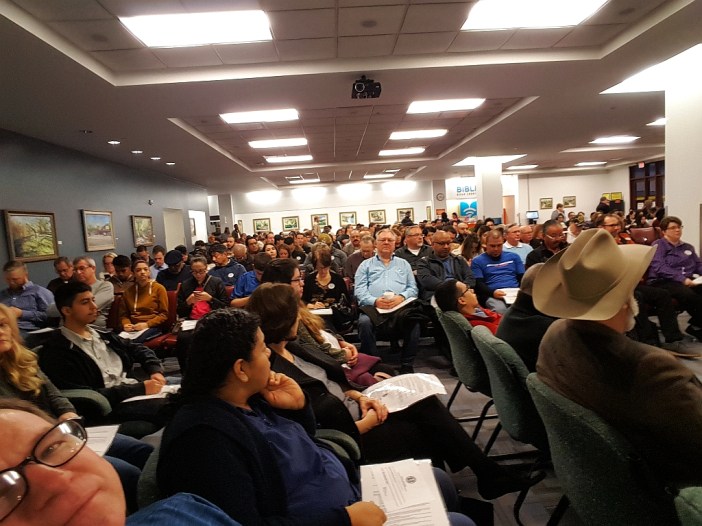
So I arrived early in the morning at an hour when many folks were still working on filling their daily quota of yawns.  They told us to go to the basement, which I did, where I found hordes of people being lined up and herded into a large room that resembled a holding pen.  The people kept coming and coming until all the chairs were filled and then the overflow were asked to stand in the aisles.  At one point we were informed that the room held no fewer than six hundred human beings.  Because I was astounded by the number of folks assembled, I took out my mobile phone and inconspicuously took a photo of a fraction of the throng only to be told, minutes later, that no sort of photography, other than selfies, would be allowed.  Of course, the absolute worst place to do the forbidden is anyplace where there are people with guns who’ve been given the authority to use them.

Eventually, my name was called with sixty-seven others.  They sent us to the third floor this time.  We huffed and puffed our way up flights of stairs where we were met with a bailiff with a gun on his hip.  Each one of us was assigned a number—mine was forty-eight.  He then lined us up in order and said, “Whenever we go into the courtroom—it could be five minutes or it could be much longer than that because, you know, there are lawyers involved.  Anyway, once we are called, we will enter in exactly the same order we are in now.  If you go in out of order, it means I haven’t done my job well.  I don’t like it when people think that I’m not good at what I do.  I know I sound mean, but I’m a man who has been married for twenty-five years.  That’s long enough to give any fellow a mean streak a mile or so wide.”  (Several people laughed at that, and it was clear he knew how to work an audience.)  Once the laughter had died down, he ran his fingers through his hair and said, “True story.  When I was a young man and just newly married, I was a sweetheart, but my wife, well, she’s something else and she has had her influence.  I won’t say she scares me, but do you see this gun, I sleep with it under my pillow at night.”  Again, there was some laughter but a little less this time.  Once it was over, he said, “Folks, I’m just kidding.  I don’t want to give anyone the wrong impression.”

The bailiff then disappeared and I began to wonder if he might moonlight at one of the standup comedy shops in the city.  I didn’t have long to ponder that possibility because we were soon called into the courtroom.  As luck would have it, I got a front-row seat, which allowed me to have an up-close-and-personal view of everything, including the judge at the rear of the room, the district attorneys (two youngish women dressed smartly in suits) and the defendant and her lawyer, a bald African-America who wore a wry smile through most of the proceedings, especially when he stood up and began to address the potential jurors.

The vast majority of my experience that day was humorous, in a sarcastic and tongue-in-cheek sort of way, except for when the judge read out the charges against the defendant:  Several counts of aggravated sexual assault of a child.  While the judge was saying all this, I watched the accused carefully.  She immediately turned her face away from us and toward the floor.  Tears began to well in her eyes and then flow down her cheeks.  At one point, I noticed she began to shake uncontrollably.  Possibly she found the courtroom to be a cold place, but I don’t think her shivering had anything to do with the temperature in the room.

It finally came time for the lawyers to ask us questions.  I was especially interested in the defense attorney.  While speaking, he paced some and was often standing no more than four or five feet away from me.  An interesting line of thought occurred as I watched him.  We Americans have a very romanticized view of lawyers and courtrooms.  This idea comes from Hollywood, but real lawyering—the kind I saw happening in front of me—looked a lot more mundane, like teaching, which I happen to do but for much smaller paychecks.  I could see that the attorney was running through his well-rehearsed list of queries and that he was sort of on autopilot.  There was no drama, nothing riveting.  Then, once those legal eagles had questioned most of us, we were made to go sit in the hallway where, once again, our bailiff tried out some of his best comedic lines.

My day ended not with a bang but with a whimper.  I was told that I wasn’t going to be seated as a juror.  In a way, this sort of bummed me out because I wanted to see how it would all end up.  I wanted to see if the defendant—a perfectly ordinarily looking individual who could have been a friend or relative—would walk free or spend a large portion of the rest of her life doing something a lot more confining.


LOOK

laptop-eyes-technology-computer


I wrote this a little more than a year ago, but it seems, once again, very apropos…

***

I can’t believe I’m being dragged back into politics.  But that is exactly what’s happening.

In 2015 I quit visiting all the political websites that had held my interest for many years.  I stopped thinking about politics and discussing the topic with others.

2015 is also the year I left Egypt after living and working there for seven years.  During that time, I was very political, at least from 2008 to 2014.  In 2011, I witnessed the mass uprising against Hosni Mubarak and found myself swept away by the euphoria that followed his deposing.  Then, two years later, during the month of July, I watched in horror as Egypt’s first democratically elected president, Mohamed Morsi, was overthrown in a military coup.  Some very scary characters referred to it as a “second revolution,” but the more apt term was “counterrevolution.”

The counterrevolution crushed my spirit but not because I was a Morsi fan.  I was devastated because I had seen how hard brave Egyptians had fought to free themselves.  And I saw the sacrifices they’d made.  Suddenly, though, they were right back at square one or even worse.  The only way I could survive such devastation was to numb myself.  So, I withdrew from politics and became apathetic, which takes me back to the point I was making about myself in the second paragraph.

I had a bit of a revival when Bernie Sanders decided to run for president.  The old political juices began to flow again.  From the moment he declared his candidacy, I felt the Bern.  Eventually, he built an incredible following and I began to see a glass that was half full.  Egypt had certainly lost its way but America, it seemed, was on the verge of finding its soul.

Then the Democratic Party machine decided that Hillary Clinton was somehow owed the nomination.  Bernie was treated unfairly and his supporters were pushed aside.  Many of us warned that Clinton was too compromised and therefore vulnerable.  Too few listened to those warnings.  Too many people were too certain about what they thought was a foregone conclusion.  There were many ominous signs for those with the ability to see and read them.  With Bernie out of the race and everyone saying Clinton was a shoo-in, I began to lose interest again.

But I never drifted entirely away.  That weird sense of foreboding I felt wouldn’t let me turn completely off.  The mood of the nation reinforced the sense of dread I felt.  It seemed all too possible that something catastrophic might happen.  And it did on November 8, 2016, a date that go down in infamy.

Now that the world as we’ve known it is in the process of vanishing, the old jump-up-on-a-soapbox Troy has reawakened.

I grew up during a period when Americans smugly believed that the nation and its people were somehow special—or exceptional.  They watched as other countries fell apart or came under the influence of evil powers but felt that such things could never happen in the greatest country the world had ever seen.  America would always remain the beacon.  It would always set the model for others to follow.

But just look where we find ourselves now.  Just look.  Look long and hard.  And while doing so, make sure not to turn your eyes away.  Don’t delude yourself into believing that what you see isn’t as bad as many are suggesting.

The truth is, it’s every bit as bad as people are saying.  We cannot know for sure how bad it may get, but it is already way beyond horrific.


Azza, Christmas Cooking, and the Great Aunt Jemima

From 2008 to 2015, I lived in Cairo, Egypt, and taught at The American University in Cairo.  In the spring of 2011, about midway through my seven-year stint in North Africa and only two months after Hosni Mubarak was pushed out of office by an enormous uprising of fed-up Egyptians, I met Azza, a born and bred Cairene and the woman who would become my wife less than a year later.

When I met Azza, she had a successful catering business, specializing in Italian food.  Now that we are living in the US—in interesting San Antonio, Texas, a place that feels a little like an American city with a whole lot of Mexico mixed in—my wife is once again considering starting her own enterprise.  This time, though, she’s looking at opening a home bakery.  (The Lone Star State doesn’t heavily regulate the cottage food industry, thus incentivizing those who wish run such a business out of their own kitchens.)

We just finished up with the Christmas holidays.  By the way, my wife is a Muslim and she just loves this time of year.  In fact, she single-handedly destroys all the ugly stereotypes that many close-minded people—I’m thinking mostly about the Trump Evangelicals as I write this—have about practitioners of Islam.  I bring all this up because she did a ton of baking in the run-up to the twenty-fifth of December, and as is usually the case, because she is such a professional in the kitchen, she wrapped a turban around her head to keep stray hair out of the food she was preparing.

One morning I saw her with such a wrap on her head and told her she looked like Aunt Jemima.  Knowing that wouldn’t understand such a reference, I tried to explain who this person was.  As luck would have it, I went to the grocery store a few minutes later and found the appropriate aisle—the one where they kept the syrups for pancakes and waffles and such—and took a picture of the label with America’s beloved Aunt’s photo on it, only to discover (and quite surprisingly too) that the Jemima of today bears little resemblance to the Jemima of old.

The conspiracy theorist in me immediately jumped to the conclusion that they took her turban off because it looked too much like a hijab.  I figured that Quaker Oats didn’t want to feature a character who looked too foreign or too exotic or too Islamic.  After all, this is Trump’s America and the rest of us are only living in it.

As it turns out, there was a reason for the company to modernize Aunt Jemima’s image, but it had nothing to do with them trying to make her look less like a Muslim.  I’ve included a video that explains the whole interesting story about the politics behind the revamping of the image of this cultural icon.


M****** Wanted to Ride Me Like a Donkey

A few days ago I started penning  a memoir as a way of coming out of a period of creative dormancy.

This post–the part that follows this intro–is an excerpt from that not-yet-titled autobiographical work.

This will be my second autobiography.  The first one was called Blue Yonder.  It was never published even though I sent it off to several literary agents in NYC (and elsewhere) and was able to generate considerable interest.  M****** K******–I don’t remember the name of the agency she worked for–strung me along for months.  She liked the manuscript but requested a few rewrites which I completed.  She also asked me to write up a book proposal.  Again, I obliged.

I sent the proposal off and she took a long while reviewing it.  She came back with a critique of my marketing plan.  She asked me to do a little research on how to market a work of nonfiction and then resubmit the proposal.  Being the good boy that I am, I did all that she asked.

To make a long story short, she eventually, after giving me the run around and building my hopes up, sent a cursory rejection note.  This had been the culmination of months of work on my part and lots of to and fro emailing.

This whole experience taught me lessons.  For one, my writing is good enough.  (She even told me so.)  Secondly, her sole reason for rejecting me was rooted in the fact I hadn’t proved to her that I could be a good salesman.  By the way, I never, not once, not even in the initial query letter, promised that I was an experienced hawker of books.  (Isn’t it asking enough that one be able to write one?)  Wasn’t she supposed to do something other than contact the publishing houses after I’d put years of labor into the project?  Her webpage promised that she would be with her authors every step of the way.  Did she really mean that or were those just pretty words?

What M****** wanted was to ride me like a donkey.  I was supposed to carry her to the place where all the money could be found and then she would jump off my back long enough to fill her saddlebags with dough.  Had I signed up with her and had book sales lagged, I sure she would have taken out a stick and flogged me on my butt along with digging her spurs into my flanks.

Anyway, I’m ready to try again, but not with M******.  The first couple of pages of the first-draft of this second attempt can be found below:

***

My heart is untroubled, and my face wears a permanent smile.  When I close my eyes and try to visualize what I look like, in my current state, I see myself as a contented Buddha-like character, sitting with crossed legs under a lotus tree.

I’m speaking metaphorically, of course, as well as beating around the bush.  I’m trying to say that I’m in one of those rare good places in my life where everything seems to have worked out perfectly well and now, as a result, I am truly happy.  I don’t know if this wonderful turn of events happened because I was able to engineer it to be so or if it’s the result of pure dumb luck.

Most of the last two years—up until about four months ago—have been damned hard, and I was, during that period of darkness, not at all feeling blissful.  Looking back at my recent past, I could say—without being guilty of anything that even remotely resembles exaggeration—that I’ve just come through hell.  On my trip through the fiery pit, I got a bit singed but wasn’t wholly reduced to ashes.

My story starts on the evening of July 2, 2015, the day I landed at Austin-Bergstrom International Airport in Austin, Texas, and was greeted by my father and stepmother.  I hardly remember my arrival in Texas’ capital because I was so exhausted.  I’m sure that the three of us talked about how my flights had gone and other inane subjects while we waited for my two pieces of luggage to find their way onto the baggage carousel conveyor belt and then into my hands.  We then made our way to my parents’ parked car, loaded my suitcases into its trunk, and drove the whole kit and caboodle to Georgetown, Texas, a beautiful, smallish city that’s located just up Interstate 35 about half an hour or so.  Once in Georgetown and at my folks’ place, I went immediately to bed and slept the fitful sort of semi-slumber I always have after completing one of my international sojourns.

This particular trip had been a really long one.  I’d started it in Cairo, Egypt, and had passed over portions of three continents—Africa, Europe, and North America—and two significant bodies of water—the Mediterranean Sea and the Atlantic Ocean.  I’d had a long layover at Paris’ Charles de Gaulle International Airport where I wiled away the hours awaiting my next flight by wandering among souvenir shops and looking at tiny, plastic versions of the Eiffel Tower.  My movements through said shops bore a strong resemblance to the way a zombie might wander in a post-apocalyptic landscape.  On a side note, many people who travel by plane have the good fortune of being able to sleep aboard those big birds as they cruise high above terra firma, but I am not blessed like this, which means that I always have to find ways to kill time.  Often, while on board, I achieve this by drinking as much alcohol as my belly and bladder can hold.  This method is tried and true for me and I took full advantage of it as I made my slow way over land and sea…